16 March 2022

16/03/2022 Aberfeldy

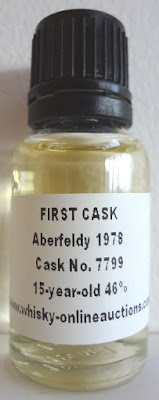
Aberfeldy 15yo d.1978 (46%, Direct Wines Ltd. First Cask, C#7799): nose: assertive, even bold (those were my initial words the first time, almost verbatim), not boisterous, this nose has green hazelnuts and springwood, blossoms and all. We have lots of yellow-flower shrubs too, such as kerria Japonica and forsythia, but also meadow flowers, dandelions and buttercups being the most obvious. In fact, they leave little room for corn-flowers. There is a mineral side to it too, with flint and polished granite, straight from a tombstone carver's shop window. Further in the back, sweet lozenges appear, faintly mentholated -- very faintly. Despite the greenness and the promise of flower-stem bitterness, this bouquet is quite elegant in a flighty way. Further nosing reveals hard-boiled eggs (distant, and still in their shells) and oak leaves. The second nose has autumnal fruits: nuts, of course, yet also apples, now. Have six months just passed over the course of one sip? The change in seasons seems to suggest it. It is now also sweeter and has an unexpected drop of engine oil. Mouth: the entrance is bitter, as expected, combining dandelion-stem sap and unripe hazelnut. It only takes a moment for them to come closer to an unsweetened almond paste and nut skins. Oh! the bitterness does not go away, but it is entirely acceptable. Chewing on the whisky makes it sweeter; not marzipan-y, but sweeter than it initially was anyway. The nut skins morph into nut shells, nuttiness and bitterness included. The texture is creamy and pleasant. The second sip sees sweet-citrus peels. In other words: acidity joins the bitterness. We see calamansis, mandarins, pink grapefruit. Wonderful stuff! Finish: here, the nuts are well ripe. They are also sprinkled with caster sugar, which means the bitter aspect almost disappears, replaced by an interesting earthiness. Walnut shells, almond shells, almond cream (imagine an almond-flavoured sort of Bailey's). Repeated sipping may add a drop of citrus juice, yet it remains largely similar, dishing out sweetened nuts, earthy cream and, this time, tulip petals alongside caramel. Excellent 'feldy. Those notes are quite different from the first time we had this dram, which illustrates the influence of position in a sequence, probably. 8/10


Happy birthday, FD!

14 March 2022

14/03/2022 Port Ellen

Port Ellen 18yo d.1976 (46%, Direct Wines Ltd. First Cask, C#4778): nose: delicate and refined peat from the get-go. Here are ashes, smoked oysters, vintage lemon squeezers (Ritter Citro -- it took me forever to remember where I used that reference, and it turns out it was for another Port Ellen), wet sand and beach shingles. It has a gently petrolic aspect too, with watered-down diesel, sand, thick with hydrocarbons, and even petrol itself, perhaps. After a few minutes, a distinct fruitiness grows, and raspberries and dried strawberry slices leap out of the glass, topped with a dollop of clotted cream, no less! Even further on, a delicate note of softwood joins the party, hazel or bramble, I am not sure. Tilting the glass unveils dusty soot. The second nose increases the fruity sweetness and throws strawberry bubble gum into the mix, as well as candied banana slices. Mouth: salty and a half on the palate, it feels pretty bold at 46%, and has red-hot metal, oyster shells, heated on the campfire (directly in the flames, in fact), diesel (lots of it) and the berries from the nose. Who would have thought to associate petrol, seawater and raspberries? A genius, that is who! It works a treat. The oily, sweet, salty and acidic facets all sing in unison, rather than compete with one another, and the result is surprisingly successful. Ground seashells, still salty from all the sea water, strawberry dunked in a jerrycan of petrol, perhaps even a touch of flint. Subsequent sips stay pretty hot, with lots of cracked black pepper and sand from the oven (why anyone would put sand in an oven is a good question! Unless they are making glass, of course). Finish: just as it did when we first had this, it falls somewhat short here, in that the finish seems weak-ish, compared to the heat of the palate. It is not, of course, and it sticks to the mouth for a long time, with petrol and burnt hazel. It is merely less intense or powerful than the nose and palate had one anticipate. As such, it is probably most adequate early on in a line-up. It retains the tarry sands and is muddier here than before, in a peat-bog sort of way. It has a soft burnt side, more heated wood (hazel again) than burnt peat or char, mind. Torched strawberries appear on the second sip, which is pretty original. Excellent dram. 8/10


For educational purposes, this is a Ritter Citro

10 March 2022

10/03/2022 Dornoch 001

Dornoch 3yo 2017/2020 (59.4%, OB, Sherry Cask, C#001): nose: it does not hide its young age. It is plum eau-de-vie, decaying pears and plum flesh. There is a vaguely earthy hue too, as well as walnut stain. Polished nut shells, dried shoe polish and shoe brushes, old rags... Breathing does wonders, here, rooting out the initial young and spirit-y impression. The second nose sees maple-syrup-glazed cured bacon, which is as welcome as it is unexpected. An earthy side is now bolder too, with damp clay and mud cakes, drying in the timid sun. Mouth: thin, strong and bitter, it has herbal plasticine (do not ask), unripe hazelnut and pear eau-de-vie. Keeping it in the mouth allows it to turn chewy, much in contrast with the thinness of the entrance. Then, the bitter, nutty notes from the nose return -- walnut vinegar, nut shells, green hazelnut and unripe plums. The second sip cranks up the heat and, if it is not frankly scorched earth, it is certainly pointing that way. Let us call it scorched plasticine. Finish: on the one hand, it is still bitter and green; on the other, it is a piece of dark-wood furniture with a coat of patina half a centimetre thick. Yes, here are polished-walnut armchairs rubbing feathers with green hazelnut (and winning). It leaves the mouth as if coated in some kind of dark wax (hence the polished walnut), yet hazelnut oil still permeates through it, as does a drop of plum vinegar. This is promising, but it currently lacks focus. Granted, the sweetness seems more balanced after having spent over a year in an open sample. We will see how good Dornoch really is when it reaches a decent age. 6/10

09 March 2022

09/03/2022 Balvenie

Balvenie 20yo d.1972 (46%, Direct Wines (Windsor) Limited First Cask, C#14734): nose: a deliciously delicate delight (ta-da!) This nose is at once flowery and fruity, with just a scent of baked goodies to boost. We have forsythia, daffodils, tulips, plums, nectarines, grapefruit peel and silky custard, all gently coming through. Further nosing reveals berries as well, perhaps gooseberry jelly and deeper shades of plums (deep purple replacing the yellow ones from earlier). Later on, we find scented erasers and strawberry paste. Lovely! The second nose appears sweeter, serving apricots, now -- squashed and in turnovers. Some of those apricots still have their stone; watch your teeth! More seriously, it means a slight bitterness. Mouth: this has more bite than the nose made me expect. It is a mix of wood spices (ginger and galangal shavings leading the way) and acidic alcohol more typical of barely-mature spirit than it is of a twenty-something whisky. Chewing it for a while unveils plasticine, bitterness and all, and wood paste. It is certainly a step up from the initial immature spirit, mind. A minuscule amount of peppermint shows up in the form of a gel. The second sip has a better balance, still acidic in a grape-pip-vinegar sort of way, yet that is now only one aspect amongst others, rather than what dominates. Crisp apple, plump grapes and green hazel wood sing in unison. Finish: the woody tones live on, with a Bourbon-cask-induced butterscotch, mocha fudge, Scottish tablet, and still a residual bitterness that could be associated with peppermint paste. Further sipping adds caramel to the equation, more burnt sugar than the sweet coulis one pours on flan. A bit too much burnt sugar, actually: that ends up overshadowing the above with an almost-charred layer. Grilled grapefruit peel, maybe -- grilled to a blackened heap of char. The nose is by far the best feature, here. I loved it almost a year ago. Today, it is only... 7/10

07 March 2022

07/03/2022 Port Dundas

Port Dundas 10yo (60.2%, Cadenhead Authentic Collection World Whiskies, 318b, b. ca 1998): tOMoH believes this is the first Port Dundas bottled by Cadenhead. It came out in the late 1990s, which suggests a 1988 distillation. All the Port Dundas by this bottler since then have been from 1988, so they would appear to be all part of the same parcel of casks. Nose: typical Port Dundas aromas, with tinned pineapples, sage, marjoram and verbena. Deeper nosing tones down the metal, hiding it under a layer of lichen and ground dry sage sprinkled on tin cans. Pineapple slices cling to the nose, but they are very much in the background, now. The juice they were kept in is completely tainted by tin and dusty metal of sorts. As one tilts the glass, the juice turns into caramelised syrup. The second nose introduces a cold moka pot (empty). Water adds some welcome custard to the nose to complement fresh pineapple. Mouth: tinny and spectacularly salty, it is also powerful and a half (with no surprise, one might add). Here, it has tins of wood stain and bitter herbs (verbena, marjoram) to match the metallic sweetness of tinned pineapple -- again: left in the tin for too long and completely stained by it. Tinned mandarin slices and verdigris come tickle the nostril as well. The second sip is fruitier and dishes out pomelo segments and pith, which makes for an unexpectedly balanced acidic-come-bitter-come-sweet side. It also has hot, dusty metal. Water makes it sweeter, yet, though there is no dramatic change. Finish: pomelo-skin shavings, dried lime zest and salt. This makes me think of margarita: tequila, citrus and salt. The finish retains some of the herbs, while the tin recedes. Oh! it is still there, mind. It only comes out as a tease, very late in the game is all. At this stage, it is ground green-citrus peel's game. Repeated sipping makes this dangerously desiccating and leaves the tongue throbbing. It also brings back metal, cleaner now than it seemed before, yet still warm. Water oddly makes it bolder in the finish, with a dash of menthol. It seems like water takes the metallic edge off the whole, somehow. Perhaps too generously, I shall go to... 8/10